
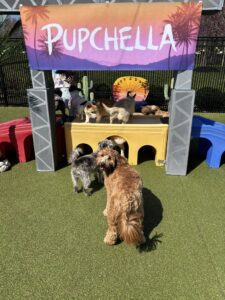
 Outdoor festivals are a regular part of life throughout Mercer County and Central New Jersey. From seasonal markets to community events, many of these gatherings welcome dogs and offer a great opportunity to spend time together outside.
For dogs experiencing their first festival, though, the environment can be a lot to take in. The combination of crowds, noise, movement, and new smells is very different from a typical walk or park visit. A little preparation helps turn that experience into something positive instead of overwhelming.
Is Your Dog Comfortable in Busy Environments?
Before bringing your dog to a festival, it is worth stepping back and considering how they typically respond to stimulation.
Dogs that are relaxed around new people, able to walk calmly on a leash, and generally curious about their surroundings tend to adjust well. Others may become uneasy with noise, tight spaces, or unpredictable movement.
If your dog is still building confidence, starting with smaller outings can make a noticeable difference. Even a short visit to a moderately busy park can help you gauge how your dog responds before committing to a larger event.
Preparing Your Pet for the Day Ahead
The goal is not to bring everything, but to bring the right things.
A secure collar or harness with updated identification is essential. A standard leash will give you better control in close quarters than a retractable one. We follow the same approach at our resort, as standard leashes allow for safer, more consistent handling in busy environments. It is also helpful to bring water, a collapsible bowl, waste bags, and a few treats to reinforce calm behavior.
If you plan to stay for an extended period, having a small towel or mat can give your dog a familiar place to settle during breaks, especially if the ground is warm or crowded.
Staying Ahead of Hydration and Heat
Hydration tends to be overlooked until it becomes a problem.
Between walking, excitement, and weather conditions, dogs can heat up quickly at outdoor events. Offering water regularly, not just when your dog appears thirsty, is one of the simplest ways to prevent issues.
It’s also important to be mindful of ground temperatures, especially on pavement or asphalt. A good rule of thumb is that if it’s too hot for your hand or bare foot, it’s too hot for your dog’s paws. In these conditions, protective booties or paw covers can help prevent burns and discomfort.
Pay attention to subtle changes. A dog that begins to slow down, pants more heavily than usual, or starts seeking shade is already telling you they need a break.
Taking a few minutes in a shaded area, stepping away from the busiest sections, or even ending the visit early can prevent a small issue from turning into something more serious.
Managing Your Dog’s Behavior Around Crowds
Festivals introduce a level of unpredictability that most dogs are not used to. Children move quickly, food is often dropped, and other dogs may approach without much warning.
Instead of expecting your dog to handle all of that independently, think of your role as creating space and structure.
Instead of walking your dog straight into the crowd, start with a lap around the perimeter of the event. This gives them a chance to take in the sights and sounds at a distance before moving into busier areas.
Body language will tell you more than anything else. A relaxed posture and steady curiosity are good signs. If your dog starts pulling away, lowering their body, or showing signs of tension, it is time to create distance or take a break.
Keeping Pet Safety the Priority
Even well-behaved dogs can become overwhelmed in the wrong situation.
It is important to stay aware of your surroundings and make small decisions throughout the day. Avoid letting your dog share communal water bowls unless you are confident in their cleanliness. Be cautious with food on the ground, which is common at festivals and can lead to stomach upset.
And if the environment becomes too crowded or the weather too warm, there is no downside to leaving early. A shorter, positive experience builds far more confidence than staying too long.
Local Events Where Dogs Are Often Welcome
Throughout the Robbinsville area, Mercer County, and Central New Jersey, there are plenty of outdoor events where dogs are part of the experience. Seasonal festivals, live music nights, and food truck gatherings at local spots like Working Dog Winery or nearby venues such as Old York Cellars and Robbinsville Farmer’s Market often welcome well-behaved, leashed dogs in their outdoor spaces.
Larger community events held at places like Mercer County Park can also be dog-friendly, depending on the event, and tend to bring bigger crowds, more noise, and more activity. These are exactly the types of environments where preparation matters most.
We have even highlighted local pet-focused events like Fur Baby Fest, which bring together pet parents and dogs from across the area. Whether it is a dedicated pet event or a general outdoor festival that allows dogs, the environment is often similar, active, social, and full of new experiences for your dog.
Building Toward Bigger Experiences
Not every dog is ready for a large outdoor event right away, and that is completely normal.
Confidence develops through consistent, positive exposure to new environments and social settings. Structured play, supervised group interaction, and regular activity all contribute to a dog’s ability to handle more complex situations.
At Golden Paws Pet Resort & Spa, many of the dogs we care for are gradually introduced to social environments in a controlled and supervised way. Over time, that experience helps them become more comfortable in settings like festivals, parks, and other community events.
A Positive First Experience Goes a Long Way
Your goal is not to make it through the entire festival. It is to make the experience a good one for your dog.
That might mean a shorter visit, more breaks, or staying on the quieter side of the event. Paying attention to your dog and adjusting in real time is what ultimately makes the difference.
For many pet parents throughout Mercer County and Central New Jersey, these events are a fun way to get out and spend time with their dogs. With the right preparation and awareness, your dog can learn to enjoy them right alongside you.
Here’s a Q & A with our Head Dog Trainer Alicia Ruggini
Have you worked with dogs who struggled in crowded or festival-like environments? What behaviors did you observe?
Yes, we’ve worked with many dogs who feel overwhelmed in crowded or festival-like environments. Some of the most common behaviors we observe include excessive panting, pulling away on the leash, barking, or trying to jump on their handler for reassurance.
In more stressful situations, dogs may become skittish, begin growling, or show signs of a fight-or-flight response, which can sometimes present as reactive or aggressive behavior. These responses are often a sign that the environment is too overwhelming for them.
What are the most common mistakes pet parents make when bringing dogs to busy public events?
One of the most common mistakes is using retractable (flex) leashes, especially when paired with harnesses, which can make it harder to maintain control in busy environments.
Another big factor is lack of preparation. Bringing a dog into a crowded setting without gradually introducing them to similar environments can quickly become overwhelming.
We also often see pet parents missing subtle cues from their dog, such as signs of stress or discomfort. It’s important to stay attentive and adjust accordingly.
Finally, it’s easy to focus on your own experience at the event rather than your dog’s. Making sure your dog is comfortable, safe, and enjoying the environment should always come first, even if it means leaving early or not participating in every part of the event.
Do you have any specific examples where daycare or socialization helped a dog become more comfortable in these settings?
Socialization and structured daycare can make a significant difference. We see it with many dogs, but one recent example that stands out is a pair of sisters, Sicily and Brooklyn, who are doodles.
When they first came to us, Brooklyn was very skittish and unsure, often showing curiosity but quickly pulling back. Sicily, on the other hand, had a stronger fight-or-flight response and would become reactive, even snapping at other dogs.
Through gradual socialization and structured daycare, both dogs were able to build confidence and become more comfortable around others. Over time, they successfully transitioned into daycare, showing much more relaxed and social behavior. This kind of progress can make a big difference when introducing dogs to busier environments like outdoor events.
Have you participated in or hosted local events like Fur Baby Fest? Any observations about how dogs typically respond?
We regularly prepare and work with dogs who attend busy, social environments. From that experience, we see dogs respond in a variety of ways depending on their temperament and level of socialization.
Confident, well-socialized dogs often enjoy the stimulation and interaction, while more sensitive or less experienced dogs can become overwhelmed by the noise, crowds, and constant activity. This is why preparation, gradual exposure, and paying close attention to your dog’s behavior are so important when attending these types of events.
Are there any specific safety concerns you regularly advise clients about in outdoor environments?
There are a few key safety concerns we regularly advise clients about when it comes to outdoor environments.
First, making sure your dog is properly fitted with the right equipment is essential. A loose collar on a larger dog or an oversized harness on a smaller dog can quickly become a safety risk if they slip out or aren’t secure.
We also look out for behaviors like leash biting, which can make it difficult to maintain control in busy or unpredictable settings.
Additionally, it’s important to be realistic about your dog’s comfort level around people. If a dog is not well-socialized or tends to react negatively to strangers, crowded environments may not be the right setting without proper training and preparation. Setting your dog up with the right equipment and environment can make all the difference in keeping everyone safe.